
<
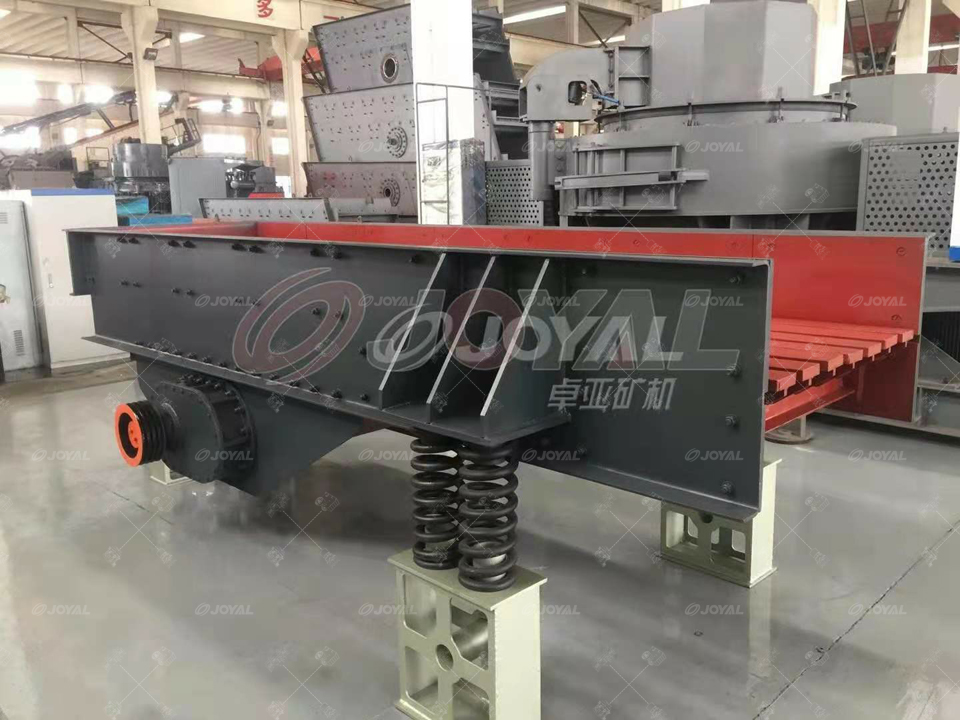
If the vibrating feeder experiences blockages or spillage, it can severely paralyze the stone production line. Therefore, ensuring the normal operation of the vibrating feeder is crucial. What are the causes of blockages, spillage, and failure to feed material in a vibrating feeder, and how can these malfunctions be avoided to ensure effective equipment operation? 1. From the perspective of the material’s characteristics, the main cause of blockages in vibrating feeders is high viscosity and moisture content. This can be caused by an excessively large or small gap between the feeder’s core and armature. 2. Overfeeding can cause material accumulation in the machine base, increasing the lifting resistance of the screw conveyor and hindering the hopper’s operation. In this case, the feed rate should be immediately reduced and a uniform feed rate maintained. 3. Insufficient material in the hopper. 4. Poor management of the material storage point, leading to large pieces of material or foreign objects entering the hopper. For example, if the screen opening at the hopper inlet of the vibrating feeder is not set as required and is too large, large pieces of material or foreign objects can enter the hopper, causing blockages. 5. This may be due to incompatibility between various components of the feeder, mainly caused by the loosening of some parts. This requires adjusting the components to their optimal tightness, ensuring the spring plate clamping bolts are tightened to the correct position, and that the chute reaches the specified amplitude range for production.